
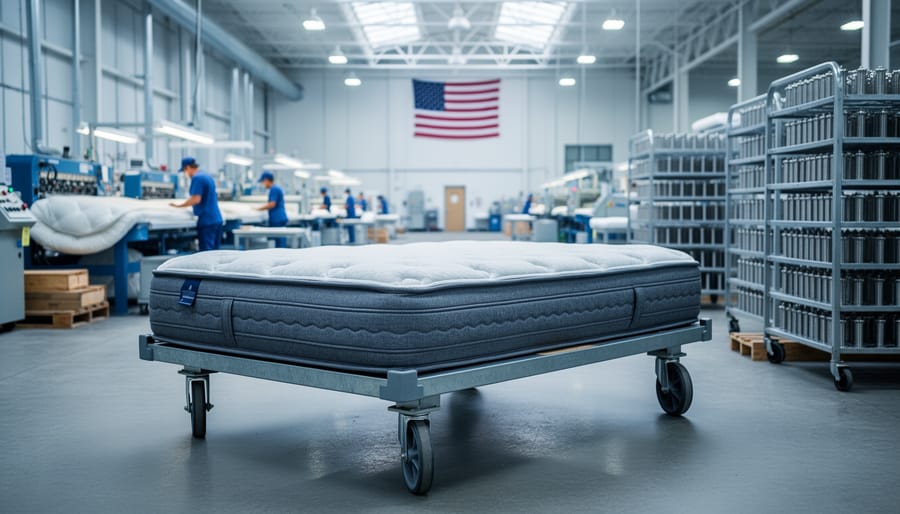
Verify manufacturing locations by checking company websites for specific factory addresses and production details, not just vague “assembled in USA” claims. Genuinely American-made mattresses list actual cities and states where components are crafted and assembled, distinguishing them from brands that merely handle final assembly domestically while importing all materials.
Request transparency documentation directly from manufacturers, including certifications like the Made in USA Certification from their suppliers and component sourcing details. Legitimate American manufacturers readily provide this information and often feature factory tours or behind-the-scenes content showing their production facilities and workforce.
Examine company ownership structures and corporate histories to identify brands truly committed to domestic manufacturing versus those practicing “patriot-washing” marketing. Long-established American mattress makers typically have decades of domestic production history and family or employee ownership rather than recent foreign acquisitions disguised by American branding.
Cross-reference claims against independent verification sources and consumer protection databases that track false advertising complaints. The mattress industry has notorious issues with deceptive origin labeling, where companies exploit loopholes by claiming American manufacturing while importing up to 90% of components.
The American mattress market presents a minefield of misleading claims, but understanding these verification methods empowers you to distinguish authentic domestic manufacturers from imposters. This guide cuts through marketing spin to identify mattresses genuinely produced in American factories by American workers, supporting local economies while ensuring the quality and ethical standards you expect. Whether you prioritize environmental responsibility, job preservation, or simply want assurance about what you’re sleeping on, knowing how to verify true American manufacturing protects both your investment and your values.
Why American-Made Mattresses Are Worth the Investment
When you invest in an American-made mattress, you’re getting more than just a place to sleep—you’re supporting a manufacturing ecosystem built on stricter standards and greater accountability.
Quality control represents one of the most significant advantages of domestic mattress production. American manufacturers operate under rigorous federal mattress regulations that govern flammability standards, material safety, and labeling accuracy. These requirements ensure that every mattress leaving a U.S. factory meets baseline safety criteria that protect consumers. While imported mattresses must technically meet these same standards, the reality of enforcement becomes murky when products are manufactured thousands of miles away with limited oversight.
Environmental regulations in the United States add another layer of consumer protection. Domestic mattress factories must comply with EPA standards for emissions, waste disposal, and chemical usage. This means fewer volatile organic compounds (VOCs) in your bedroom and less environmental damage during production. Manufacturing processes that would be permitted in countries with lax environmental oversight simply aren’t allowed here, resulting in cleaner, safer products.
Labor practices matter too, both ethically and practically. American mattress workers earn fair wages and work in facilities subject to OSHA safety standards. This isn’t just about social responsibility—it directly impacts product quality. Skilled craftspeople who are fairly compensated and properly trained produce better mattresses with fewer defects. The attention to detail in American workshops often exceeds what’s possible in facilities prioritizing speed and cost-cutting over craftsmanship.
The environmental benefits extend beyond the factory floor. Shorter shipping distances from American factories to your bedroom dramatically reduce the carbon footprint associated with your purchase. A mattress manufactured in California and shipped to Colorado travels a fraction of the distance compared to one manufactured overseas, resulting in significantly lower transportation emissions.
Finally, purchasing American-made mattresses directly supports domestic manufacturing jobs and strengthens local economies. Every mattress sold keeps skilled positions in communities across the country, from textile workers to factory technicians. This economic ripple effect helps maintain the manufacturing expertise that makes quality American craftsmanship possible.
When you weigh these factors together—superior oversight, environmental responsibility, ethical labor practices, reduced environmental impact, and economic support for American workers—the investment in a domestically produced mattress becomes clearly justified beyond the product itself.

What Makes a Mattress Truly ‘American-Made’
Understanding what qualifies as genuinely American-made requires looking beyond marketing claims to the Federal Trade Commission’s specific requirements. According to FTC Made in USA standards, a product can only be labeled “Made in USA” without qualifications when all or virtually all of the product has been made in America. This means the final assembly, significant processing, and the majority of components must be of U.S. origin.
The mattress industry presents particular challenges because many companies use misleading language to suggest domestic manufacturing when reality tells a different story. A mattress “assembled in USA” using imported materials and components doesn’t meet the FTC standard for unqualified Made in USA claims. Similarly, a company might manufacture foam cores domestically but import covers, quilting, and other materials from overseas, creating a hybrid product that shouldn’t carry an unqualified American-made label.
To truly qualify as American-made, a mattress should have its major components—foam, springs, fabric, and other materials—sourced domestically, with manufacturing and assembly completed in U.S. facilities. The FTC doesn’t specify an exact percentage threshold, but their “all or virtually all” standard means negligible foreign content at most. Some mattress makers claim American-made status while importing significant components like specialty foams, latex, or high-end fabrics from Europe or Asia.
When evaluating mattress manufacturers, look for companies that openly disclose their supply chain, maintain domestic factories they’re willing to name and locate, and provide specific information about material sourcing. Transparency about what components might come from elsewhere demonstrates honesty and respect for informed consumers making purchasing decisions based on supporting American manufacturing and craftsmanship.
Top American-Made Mattress Recommendations by Type
Best American-Made Innerspring Mattresses
Innerspring mattresses remain a popular choice for those seeking traditional support and responsiveness, and several American manufacturers continue producing high-quality options domestically. These companies handle critical manufacturing steps on U.S. soil, including coil production and assembly.
Saatva stands out as a leading American-made innerspring option. The company manufactures its mattresses in facilities located in California, Indiana, North Carolina, and Texas. Their signature Saatva Classic features individually wrapped coils made domestically, paired with American-sourced steel. The comfort layers include organic cotton and recycled steel coils, with assembly completed entirely in their U.S. facilities. Saatva maintains transparency about their supply chain and offers factory tours by appointment, demonstrating confidence in their manufacturing practices.
WinkBeds operates manufacturing facilities in Wisconsin, where they produce their entire mattress line. Their flagship WinkBed model uses a coil-on-coil construction with Quantum Edge steel coils manufactured in the United States. The company employs local craftspeople and maintains strict quality control throughout the production process. Each mattress is built to order, reducing waste and ensuring freshness upon delivery.
Kingsdown, a family-owned business since 1904, operates manufacturing plants in North Carolina. They specialize in innerspring technology and produce their coil systems in-house. Their mattresses feature zoned support systems and gel-infused comfort layers, assembled by skilled technicians in their domestic facilities. Kingsdown supplies mattresses to both retail partners and direct consumers, with clear labeling indicating American production.
- Superior edge support and durability compared to foam alternatives
- Enhanced breathability keeps sleepers cooler throughout the night
- Verified domestic coil manufacturing ensures quality steel components
- Strong bounce and responsiveness preferred by combination sleepers
- Generally higher price points than imported innerspring options
- Some models can be heavy and difficult to move or rotate
- Motion transfer may be noticeable with traditional continuous coil designs
When evaluating innerspring mattresses, verify that both the coil manufacturing and final assembly occur domestically. Some brands import pre-made coil systems from overseas and only perform assembly in the U.S., which may not meet your standards for American-made products. Request documentation about where the steel is sourced and manufactured, as this represents the core component of any innerspring mattress. Genuine American manufacturers will readily provide this information and often highlight their domestic coil production as a competitive advantage.

Best American-Made Memory Foam Mattresses
Memory foam mattresses manufactured in the United States offer pressure relief and motion isolation while supporting domestic production, but verifying the origin of foam materials requires careful investigation. Unlike innerspring mattresses where component sourcing is often more transparent, memory foam manufacturing involves complex chemical processes and supply chains that aren’t always disclosed.
Several American manufacturers produce quality memory foam mattresses using domestically-sourced materials. Amerisleep operates facilities in the United States and uses their proprietary Bio-Pur foam, which is manufactured domestically with plant-based materials replacing some petroleum-based components. Their AS3 model represents a medium-firmness option suitable for various sleep positions, with foam certified by CertiPUR-US standards for emissions and chemical content.
Brooklyn Bedding, based in Arizona, manufactures their Bowery Hybrid and other memory foam models in their own factories. The company controls the entire production process, from foam pouring to final assembly, ensuring quality oversight. Their transparency regarding manufacturing locations and processes makes verification straightforward for consumers prioritizing American production.
Brentwood Home produces their memory foam mattresses in Los Angeles, California, using CertiPUR-US certified foams. The company emphasizes sustainable manufacturing practices and maintains direct control over their production facilities. Their Cypress mattress combines gel memory foam with other comfort layers, all assembled domestically.
When evaluating memory foam mattresses, confirm that the foam itself originates from U.S. suppliers, not just the assembly location. Request documentation showing where foam materials are sourced and manufactured. CertiPUR-US certification indicates foam meets specific safety and emissions standards but doesn’t guarantee American origin. Reputable manufacturers will provide clear answers about their supply chain, including foam production locations. Be cautious of vague marketing language that emphasizes “assembled in America” without addressing foam sourcing, as this often indicates imported materials.

Best American-Made Latex Mattresses
Latex mattresses offer a unique combination of natural materials and durable construction, making them an attractive option for consumers seeking American-made sleep solutions. When evaluating USA-manufactured latex mattresses, understanding the origin of the latex itself is crucial, as not all “American-made” latex mattresses use domestically-sourced materials.
The latex used in mattresses comes in two primary forms: natural latex derived from rubber tree sap and synthetic latex created from petroleum-based compounds. Some manufacturers also use blended latex, combining both types. Natural latex typically comes from Sri Lanka, Malaysia, or other tropical regions where rubber trees grow, meaning even American-made latex mattresses rely on imported raw materials. However, the manufacturing process—where latex is processed, poured into molds, and assembled into finished mattresses—can occur entirely in the United States.
Several American manufacturers have established transparent supply chains for their latex mattresses. These companies import raw latex or processed latex cores from overseas suppliers, then handle the cutting, layering, cover assembly, and final construction at their domestic facilities. This approach allows them to maintain quality control over the finished product while being honest about material sourcing.
The two primary methods for processing latex are the Dunlop and Talalay processes. Dunlop latex tends to be denser and firmer, while Talalay latex offers a more consistent feel throughout the core. Some American facilities specialize in Talalay processing, completing this complex manufacturing step domestically before final mattress assembly.
- Natural latex provides excellent durability, often lasting 15-20 years with proper care.
- Latex offers responsive support that contours to the body without the sinking sensation of memory foam.
- American manufacturing ensures quality control during critical assembly and construction phases.
- Many latex mattresses feature removable covers for easier cleaning and maintenance.
- Latex raw materials are not sourced domestically due to climate requirements for rubber trees.
- Premium natural latex mattresses typically cost significantly more than synthetic alternatives.
- Some consumers find the natural rubber scent of latex mattresses off-putting initially.
- Heavy weight makes latex mattresses difficult to move or rotate without assistance.
When evaluating American-made latex mattresses, verify where the actual manufacturing occurs rather than just where the company is headquartered. Reputable manufacturers will clearly state which processes happen at their US facilities and acknowledge when raw materials are imported. Look for certifications like GOLS (Global Organic Latex Standard) for natural latex content and transparency about the percentage of domestic content in the final product.
Best American-Made Hybrid Mattresses
Hybrid mattresses represent a popular middle ground, combining the pressure relief of foam or latex with the support and breathability of innerspring coils. When shopping for American-made hybrids, understanding where components originate becomes particularly important since these mattresses incorporate multiple materials.
Several manufacturers stand out for their commitment to domestic production. Saatva operates its own factory in Southern California and sources steel coils from domestic suppliers. Their hybrid models use American-made steel springs combined with foams and organic cotton, offering transparency about component origins. The company provides detailed information about their supply chain, making verification straightforward for concerned consumers.
WinkBeds manufactures in Wisconsin and emphasizes their use of American-sourced materials wherever possible. Their hybrid construction includes domestically produced Quantum Edge steel coils and CertiPUR-US certified foams. The company clearly identifies which components come from U.S. suppliers versus international sources, demonstrating the transparency discerning shoppers should expect.
Nest Bedding produces their hybrid mattresses in their own California facilities. They combine locally sourced components with some internationally sourced materials but maintain complete assembly domestically. The company openly discusses their sourcing decisions and manufacturing processes, allowing customers to make informed choices.
When evaluating hybrid mattress claims, ask specific questions about component sourcing. Many brands assemble mattresses domestically but import all materials. While “assembled in USA” still provides quality control benefits and supports American jobs, it differs from mattresses using predominantly domestic materials. Reputable manufacturers willingly provide documentation about where their steel coils, foams, latex, and textiles originate.
Look for companies that specify their manufacturing locations by city and state rather than vague “made in America” statements. Verify certifications like CertiPUR-US for foams and check whether companies own their factories or contract production. These details reveal the true extent of American manufacturing involvement and help you support companies genuinely invested in domestic production rather than those simply marketing themselves as American-made.
Price Comparison: American-Made vs. Imported Mattresses
When comparing prices between American-made and imported mattresses, the upfront cost difference can be substantial, but the complete financial picture tells a more nuanced story. American-made mattresses typically cost 20-40% more at initial purchase, with quality models ranging from $1,200 to $3,500 for a queen size, compared to $800 to $2,000 for comparable imported options. However, this price gap narrows significantly when you examine the total cost of ownership.
| Factor | American-Made | Imported |
|---|---|---|
| Average Price (Queen) | $1,800-$2,800 | $1,000-$1,800 |
| Expected Lifespan | 10-15 years | 6-8 years |
| Warranty Coverage | 10-25 years | 5-10 years |
| Cost Per Year | $150-$250 | $165-$300 |
The durability advantage of American-made mattresses stems from stricter quality control and higher-grade materials. Domestic manufacturers often use denser foams, reinforced edge support systems, and more durable coil constructions that maintain their structural integrity longer. This extended lifespan means you may purchase only one American-made mattress in the time you would replace an imported mattress twice.
Warranty coverage represents another critical value consideration. American manufacturers typically offer comprehensive warranties ranging from 10 to 25 years with accessible customer service based in the United States. These warranties often cover more defects and provide clearer replacement terms. Imported mattresses may advertise comparable warranty periods, but coverage limitations and difficult claims processes can diminish their practical value.
Transportation costs also factor differently. American-made mattresses travel shorter distances from factory to consumer, reducing shipping expenses and environmental impact. Many domestic manufacturers offer white-glove delivery services at competitive rates because of regional production facilities.
For budget-conscious shoppers, consider that spending an additional $800 upfront for a mattress lasting 12 years versus 7 years results in lower annual costs and eliminates the hassle and expense of premature replacement. The combination of superior durability, robust warranty protection, and better customer support makes American-made mattresses a financially sound investment for consumers prioritizing long-term value over immediate savings.
How We Verified These Recommendations
We take verification seriously because we know how many mattress companies make misleading claims about their American manufacturing credentials. Our research process for these recommendations involved multiple verification layers to ensure accuracy.
First, we directly contacted each manufacturer to document their production locations, sourcing practices, and percentage of American-made components. We requested specifics about where foam, springs, fabric, and other materials originate, then cross-referenced these claims with third-party sources including business registrations, factory locations, and supply chain documentation.
For manufacturing verification, we examined whether companies own their facilities or contract production, where final assembly occurs, and what percentage of the mattress is genuinely made in America versus simply assembled here from imported materials. We prioritized brands that manufacture core components domestically rather than those that only perform final assembly in the United States.
Our testing criteria evaluated construction quality, material durability, and whether the mattress delivered on promised features. We analyzed customer feedback from verified purchasers across multiple platforms, looking for patterns in satisfaction levels, longevity reports, and complaints. We specifically noted whether customers felt the American-made premium was justified by product quality.
Company transparency played a crucial role in our evaluation. We favored manufacturers that openly disclose their supply chains, production processes, and material sources on their websites. Companies that provided vague language like “American craftsmanship” without specifics received scrutiny and often didn’t make our recommendations.
We also investigated certifications such as CertiPUR-US for foam safety and environmental standards, recognizing that ethical manufacturing extends beyond geographic location. This comprehensive approach ensures you receive honest, verified recommendations from companies genuinely committed to American manufacturing rather than those simply capitalizing on patriotic marketing.

Red Flags: Brands Falsely Claiming American Manufacturing
Unfortunately, not every mattress marketed as “American-made” truly qualifies. Some manufacturers use misleading tactics to capitalize on consumer demand for domestic products without actually producing mattresses in the United States.
One common deceptive practice involves the phrase “Designed in America” or “American-owned company.” While these statements may be technically true, they often mask the reality that manufacturing occurs overseas. A mattress designed in California but assembled in China doesn’t support American workers or meet legitimate Made in USA standards.
Another red flag is vague language about “final assembly” occurring domestically. Some brands import nearly complete mattresses from foreign manufacturers, then add minor finishing touches like a cover or label in the U.S. This allows them to claim American assembly while the majority of labor and materials come from abroad.
Watch for companies that prominently display American flags in their marketing but bury country-of-origin details in fine print or avoid the topic entirely on product pages. Legitimate American manufacturers proudly specify where their mattresses are made because they’ve invested in domestic production.
The Federal Trade Commission requires that products labeled “Made in USA” must be “all or virtually all” made in America. This means final assembly, significant manufacturing processes, and the majority of materials should originate domestically. If a brand can’t clearly explain where their mattresses are manufactured or deflects questions about sourcing, consider it a warning sign.
Always verify claims by checking the company’s website for specific manufacturing location information, reading the product law tag, and looking for third-party certifications that validate American production. When transparency is lacking, your wallet should stay closed.
Choosing an American-made mattress represents more than a simple purchase—it’s an investment in domestic manufacturing, transparent supply chains, and quality craftsmanship. As you’ve learned throughout this guide, the “Made in USA” label requires verification, as some companies use misleading language to obscure their true manufacturing origins. Always request specific information about where materials are sourced and where final assembly occurs before making your decision.
For budget-conscious buyers, look for manufacturers that own their factories and sell directly to consumers, eliminating middleman markups while maintaining American production. If material priorities guide your choice, seek out companies transparent about their foam certifications, fabric origins, and component sourcing. Side sleepers should prioritize brands offering pressure relief with American-made comfort layers, while back and stomach sleepers benefit from supportive core construction made domestically.
Before purchasing, verify manufacturing claims by checking company websites for factory locations, reading the fine print on warranties, and contacting customer service directly with specific questions. Genuine American manufacturers take pride in their origins and willingly share detailed information about their processes. By taking these verification steps, you support authentic domestic production while ensuring you receive the quality and transparency you deserve. Make your choice confidently, knowing you’ve done the research to find a truly American-made mattress.
